
The Right Drug, the First Time
Akinyemi Oni-Orisan, PharmD, PhD, is using genetics to end the guesswork in prescribing and helping make sure no one gets left behind.
Showing 24 of 607 articles
Akinyemi Oni-Orisan, PharmD, PhD, is using genetics to end the guesswork in prescribing and helping make sure no one gets left behind.

In a new JAMA Viewpoint, Kathryn A. Phillips, PhD, examines why expanding access to hearing aids over the counter hasn't eliminated barriers to getting appropriate hearing care.

Menopause can bring a range of physical and emotional changes, causing many women to seek dietary supplements or other nonhormonal approaches for relief. Candy Tsourinis, PharmD, professor in the Department of Clinical Pharmacy, discusses what people should know about these options, including what the evidence shows, what “hormone balancing” really means, and why it’s important to consider your individual medical and family history before starting a supplement.
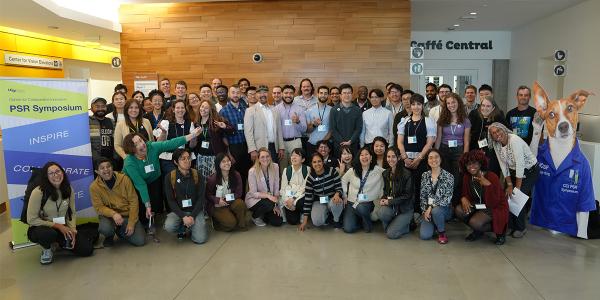
Postdoctoral scholars, specialists, and researchers (PSRs) from across the UCSF School of Pharmacy gathered at the Wayne and Gladys Valley Center for Vision on the Mission Bay campus on June 24, 2026, for the third annual PSR Symposium, an inspiring day of scientific exchange, career development, and community building hosted by the Center for Collaborative Innovation (CCI).

A study authored by Jonathan Watanabe, PharmD, MS, PhD, chair of the UCSF Department of Clinical Pharmacy, shows that aligning approval across countries could make it easier for biosimilars to reach the market — and hopefully lower costs for all patients, just like generics.

A team of experts, including Tram Cat, PharmD, BCPS, associate dean of student affairs at the UCSF School of Pharmacy, has developed “The Preceptors’ Toolkit for Working with Struggling Pharmacy Students” — published in the international, peer-reviewed, open-access journal Pharmacy — that offers a structured path forward for supporting underperforming learners while upholding professional standards.

Seven forward-thinking projects poised to advance the mission of the UCSF School of Pharmacy have been selected to receive support through the 2026 Mary Anne Koda-Kimble Seed Award for Innovation.

A study co-authored by professor Jonathan Watanabe, PharmD, MS, PhD, is driving federal changes in how pharmacists nationwide are counted, a shift that would more accurately reflect their increasingly diverse roles.

California Poison Control System experts are using National Poison Prevention Week to warn about an especially dangerous hazard hiding in many homes: tiny button batteries found in everyday items.

From designing smarter tuberculosis treatments to engineering new therapeutic proteins and decoding the genetic basis of disease, research at the UCSF School of Pharmacy is improving patient care and advancing medicine worldwide.

Jennifer Cocohoba, PharmD ’01, MAS, professor in the school’s Department of Clinical Pharmacy, has been selected to deliver the Last Lecture, an annual tradition in which UCSF students elect one faculty member to answer the question: “If you have but one lecture to give, what would you say?”

Sharon Youmans, PharmD ’85, MPH, executive vice dean and professor in the Department of Clinical Pharmacy, has been named to the California Pharmacists Association (CPhA) Hall of Fame, while alum and volunteer faculty member Maria Lopez, PharmD ’01, has been selected as CPhA’s 2026 Pharmacist of the Year.

Pharmacogenetics — the use of genetic information to guide medication prescribing decisions — is a foundation of precision medicine, with growing implications for safety, efficacy, and cost savings. At the UCSF School of Pharmacy, Akinyemi Oni-Orisan, PharmD, PhD, associate professor in the Department of Clinical Pharmacy, conducts studies to help ensure that pharmacogenetics will benefit broad patient groups equitably.

Every year, the UCSF School of Pharmacy welcomes a new class of learners whose paths into the profession reflect the changing landscape of pharmacy. Among the Class of 2028 are a handful of "nontraditional" students who returned to school to pursue a PharmD degree after established careers.

California is experiencing an unprecedented outbreak of mushroom poisonings, prompting urgent action from the California Poison Control System (CPCS), which is operated by the UCSF School of Pharmacy.

Spanning the HIV epidemic, clinical pharmacy professors Betty Dong, PharmD, and Jennifer Cocohoba, PharmD, represent the role pharmacists have played in UCSF’s dedication to evidence-based, patient-centered innovation.

A new Nature study co-led by Amelia Deitchman, PharmD, PhD, associate professor in the Department of Clinical Pharmacy, offers one of the most promising signs yet that sustained, antiretroviral therapy (ART)-free viral remission may be possible.

Lisa Kroon, PharmD, assistant chief pharmacy officer of clinical innovation, education and research at UCSF Health and a professor in the Department of Clinical Pharmacy, discusses the growing interest in GLP-1 medication and the important role pharmacists play in helping patients and clinicians navigate the clinical, financial, and access challenges of these popular drugs.

New research led by Department of Clinical Pharmacy Chair Jonathan Watanabe reveals the economic and access benefits of biosimilar insulins, offering a model for pharmacist-driven health policy and affordability.
At the UCSF School of Pharmacy, innovation in patient care often starts beyond clinic walls. Through programs like Cut Hypertension, Director of Community-Based Practice Innovation, Crystal Zhou, PharmD, is closing gaps in access to care and improving health outcomes while shaping the next generation of pharmacists.
Dean Kathy Giacomini, PhD, BSPharm, received her flu shot from a second-year PharmD student, calling attention to the pharmacist’s role in safeguarding public health and kicking off American Pharmacists Month.
On World Pharmacists Day, UCSF Health celebrates the one-year anniversary of two new outpatient pharmacies that show how pharmacists advance patient-centered care through innovation, integration, and education.